Our trip to Bhutan: Day 5, Punakha festival
Table of Contents
Before I deep-dive into your trip, let me say a few words about the trip arrangement. Firstly, how did we choose Bhutan? I’ve been to Nepal before and heard about Bhutan being an Asian Switzerland, so visiting this country was on my list a long time ago.
Secondly, we did not plan much, the travel agency did everything for us. We expressed our interest and the itinerary was adjusted based on our tastes. In addition, the itinerary was customized even more during the trip according to our desires. The guide was very attentive and helpful.
Lastly, our package included everything—three meals a day, a hotel, flight tickets, etc. We brought some money but barely spent any. Our main expenses were a few alcoholic drinks, which aren’t included, souvenirs, and generous tips for our amazing guide and driver.
I want to say a big thank you to Breathe Bhutan and personally to Sonam and Kuenga for our fantastic time in Bhutan!
Links to the next parts
- Bhutan, Day 1: Arrival
- Bhutan, Day 2: Thimphu City and Fertility temple
- Bhutan, Day 3: Punakha
- Bhutan, Day 4: Phobjikha valley
- Bhutan, Day 6: Tiger Nest hike
Visiting a ceremony and young monks
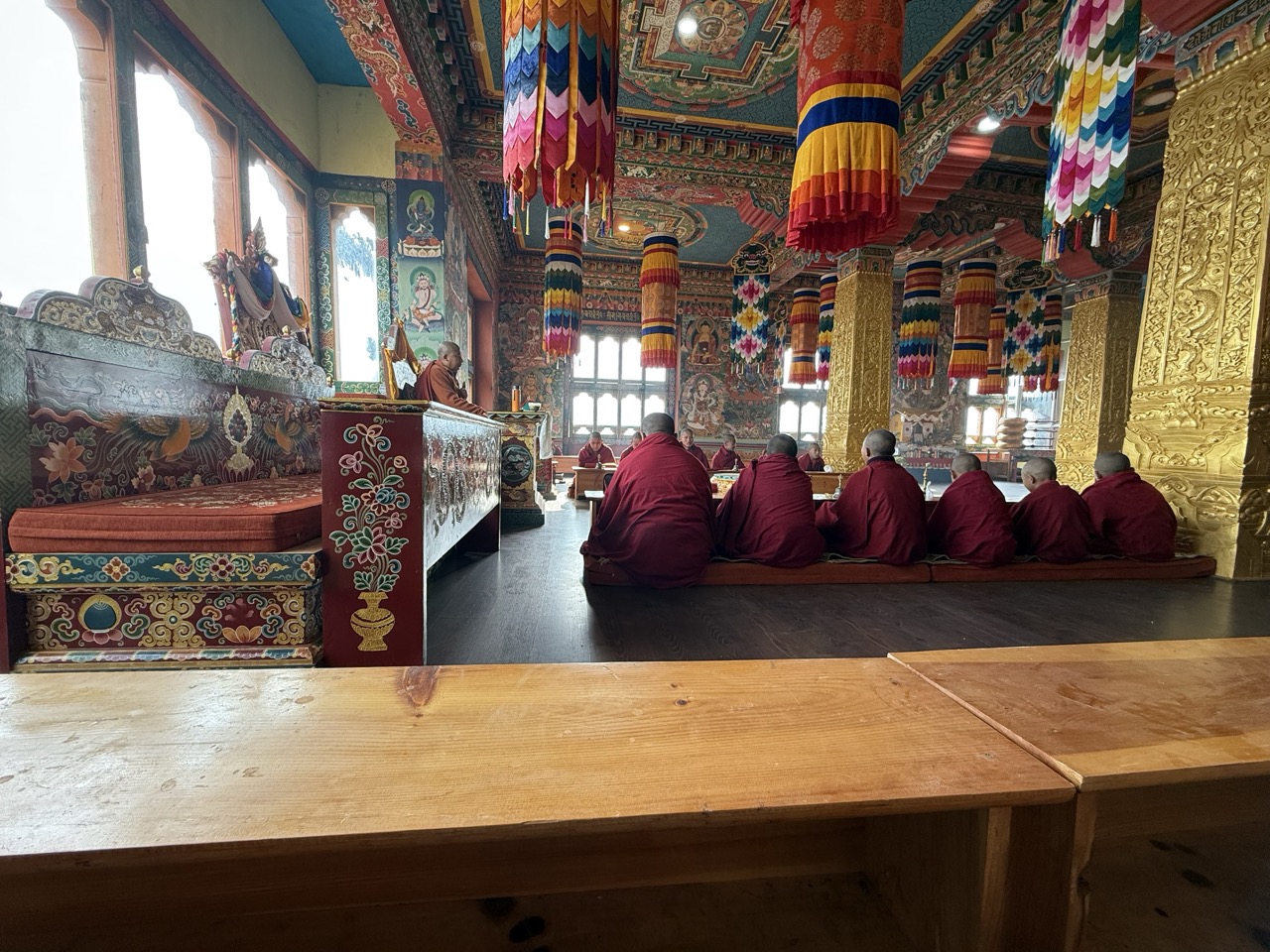
The next morning began with a short visit to a local monastery, located close to the eco lodge. Young monks, together with a senior monk, performed a cleansing ritual on us. We didn’t know what was happening, but it was extremely interesting to observe the young monks. They were more interested in us than in the ritual. Some youngsters weren’t too focused and a bit sleepy (it was quite early in the morning) during the ritual. From our point of view, it was extremely interesting to observe their daily routine.

During the ritual, we’d offer some tea and fried rice. Lastly, an older boy poured a bit of aromatic water on our heads as a sign of cleansing.
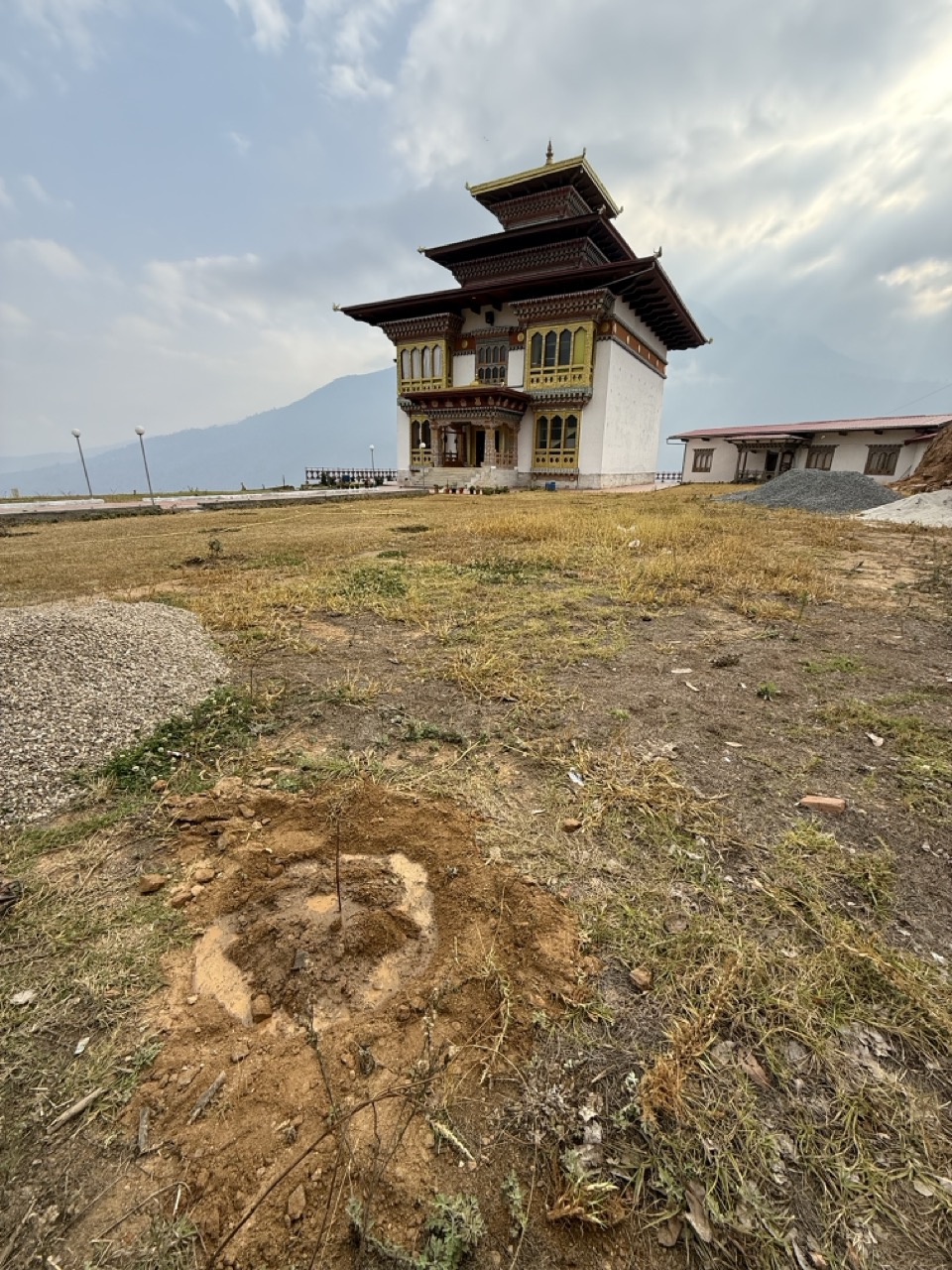
After the ritual, we planted a tree with the help of our guide.
The festival in the Punakha fortress
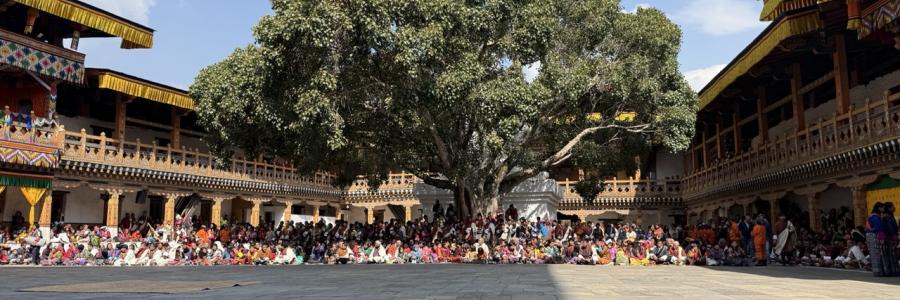
That was our second stop at the Punakha fortress. A couple of days ago, we saw a preparation for the ritual, and on this day, the actual ritual occured. From the walkway to the bridge, I felt something in the air. The space was more crowded than usual, people were dressed differently, and I was able to hear traditional tunes in the distance.

The fortress’s ground had a dedicated area for tourists, where we were taken. One of our guides had a friend in the monastery, so we had a unique privilege - an old carpet.

The overall scene looks immensely surreal: an ancient, Bhutanese fortress with walls, draped in bright, festival fabric, a huge, massive, old tree, like an ent from LoTR, in the middle of the yard, and a plethora of Bhutanese people, dressed in traditional cloth. Truly a scene from a fantasy movie.
But things got even more surreal when the dancers started their performance. Firstly, a group of ladies, dressed in traditional costumes, presented a traditional dance. After the first 5 minutes, a group of gentlemen joined the ladies and presented something extremely similar to a Russian traditional, round dance (хоровод).
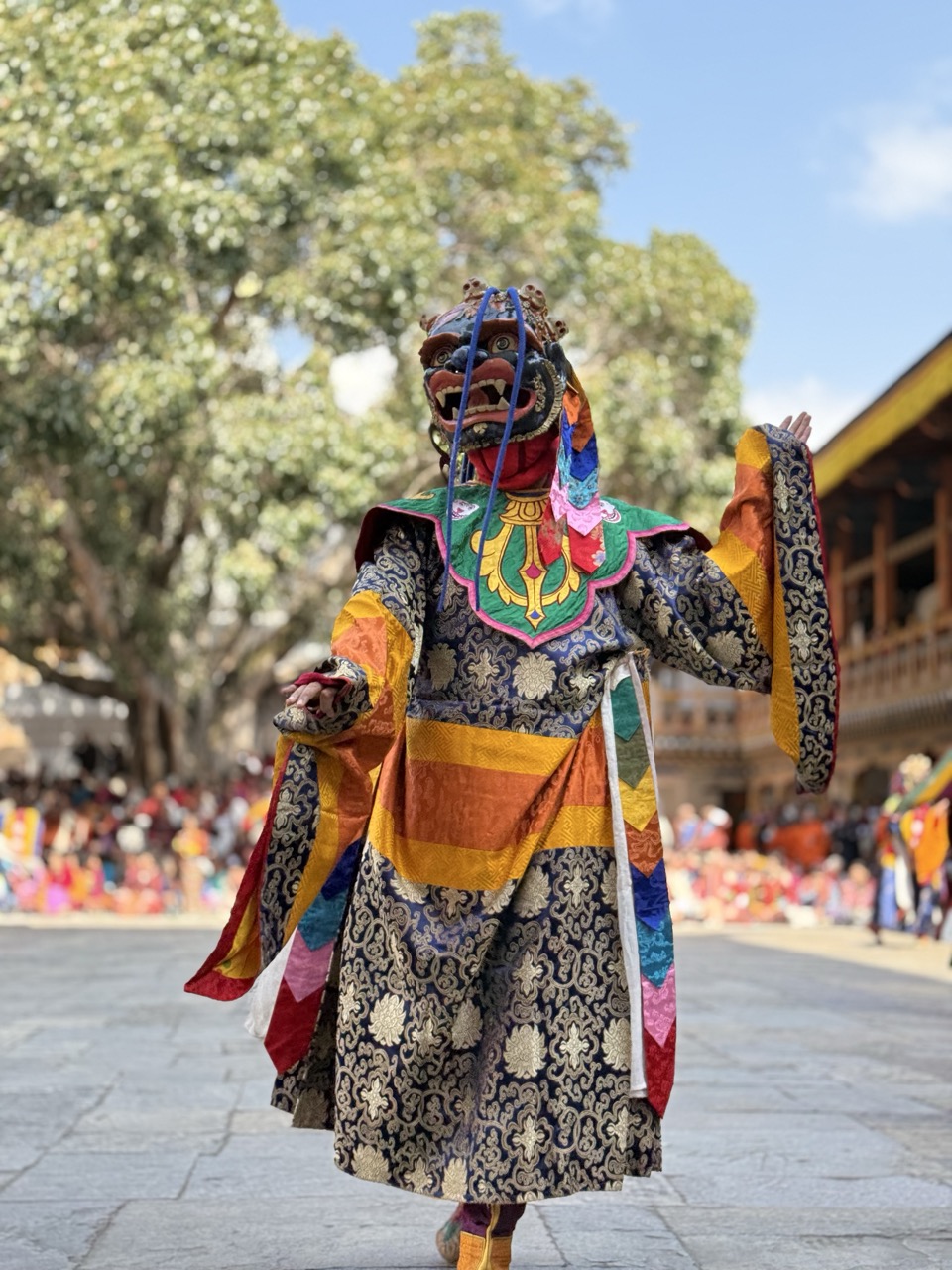
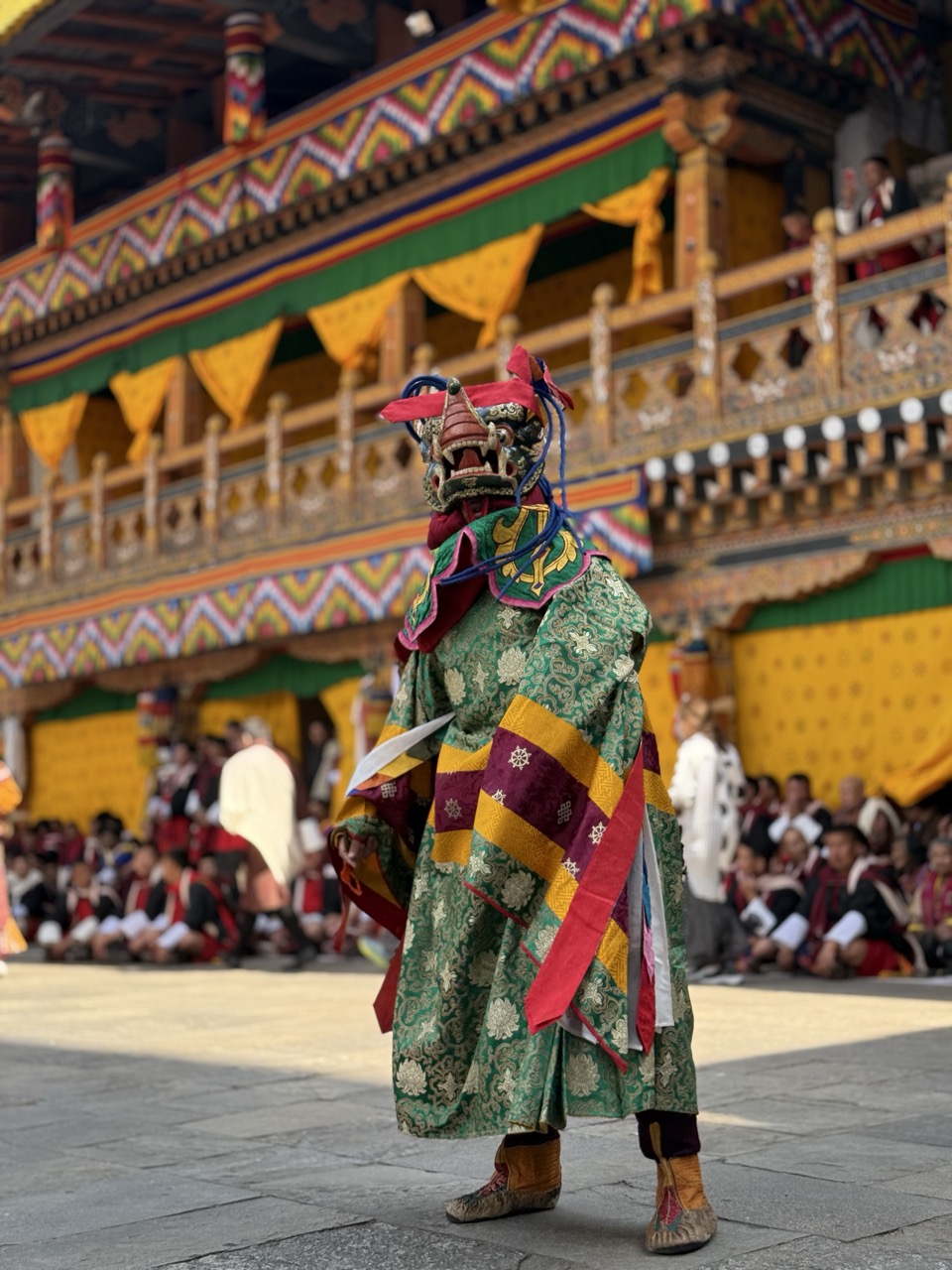
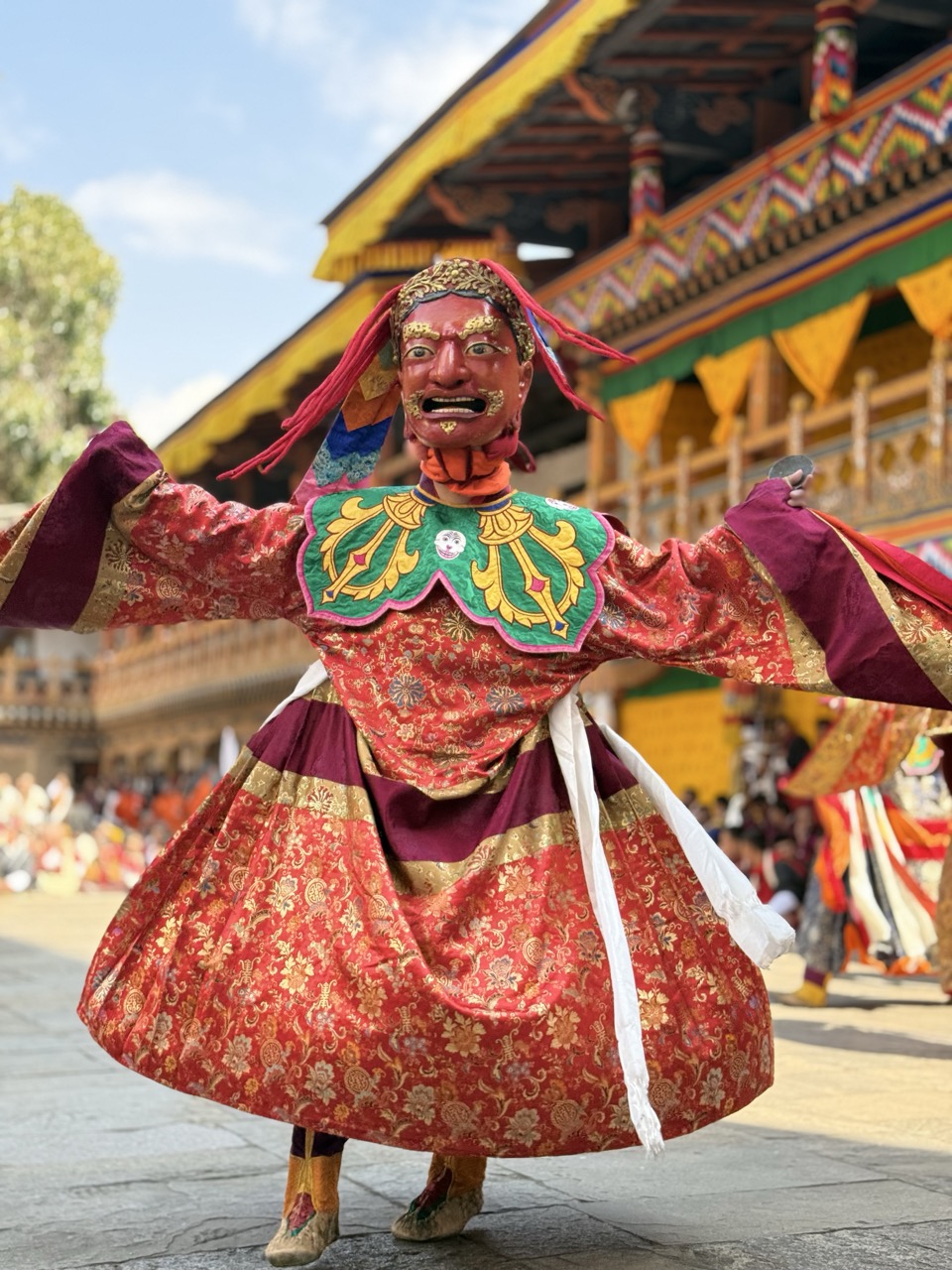
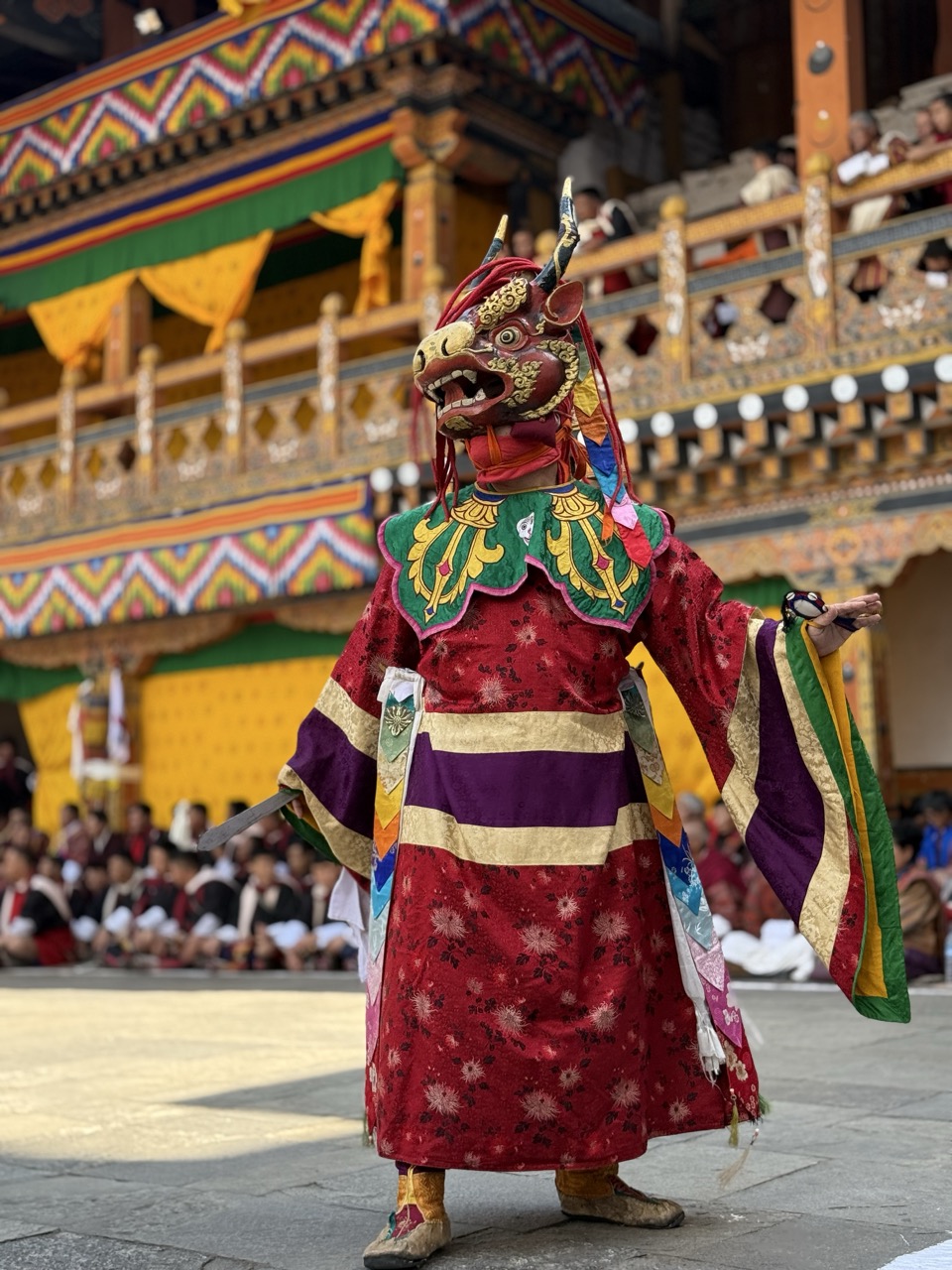
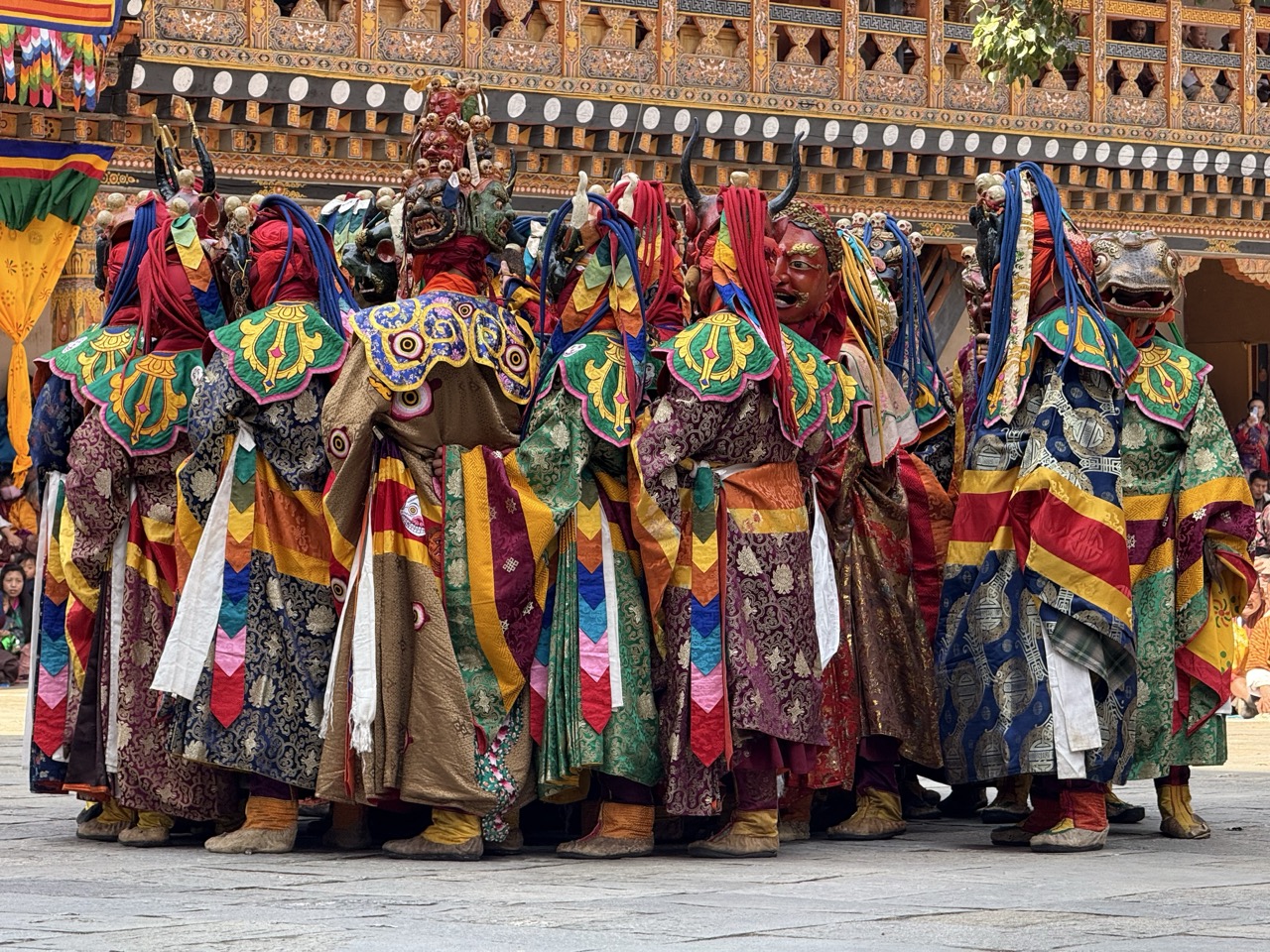
And after the first, intro performance, the main action started. People in various costumes and masks started coming to the center of the square and dancing. Firstly, I would like to say a word about their costumes. Each costume has a great deal of detail. All dresses are extremely colourful with a plethora of long ribbons that develop on the fly. Secondly, it’s a mask. Each mask is made of wood with a great level of craftsmanship. A mask has a lot of intricate details carefully crafted and painted. In general, it feels like a performer’s mask is a separate piece of art.
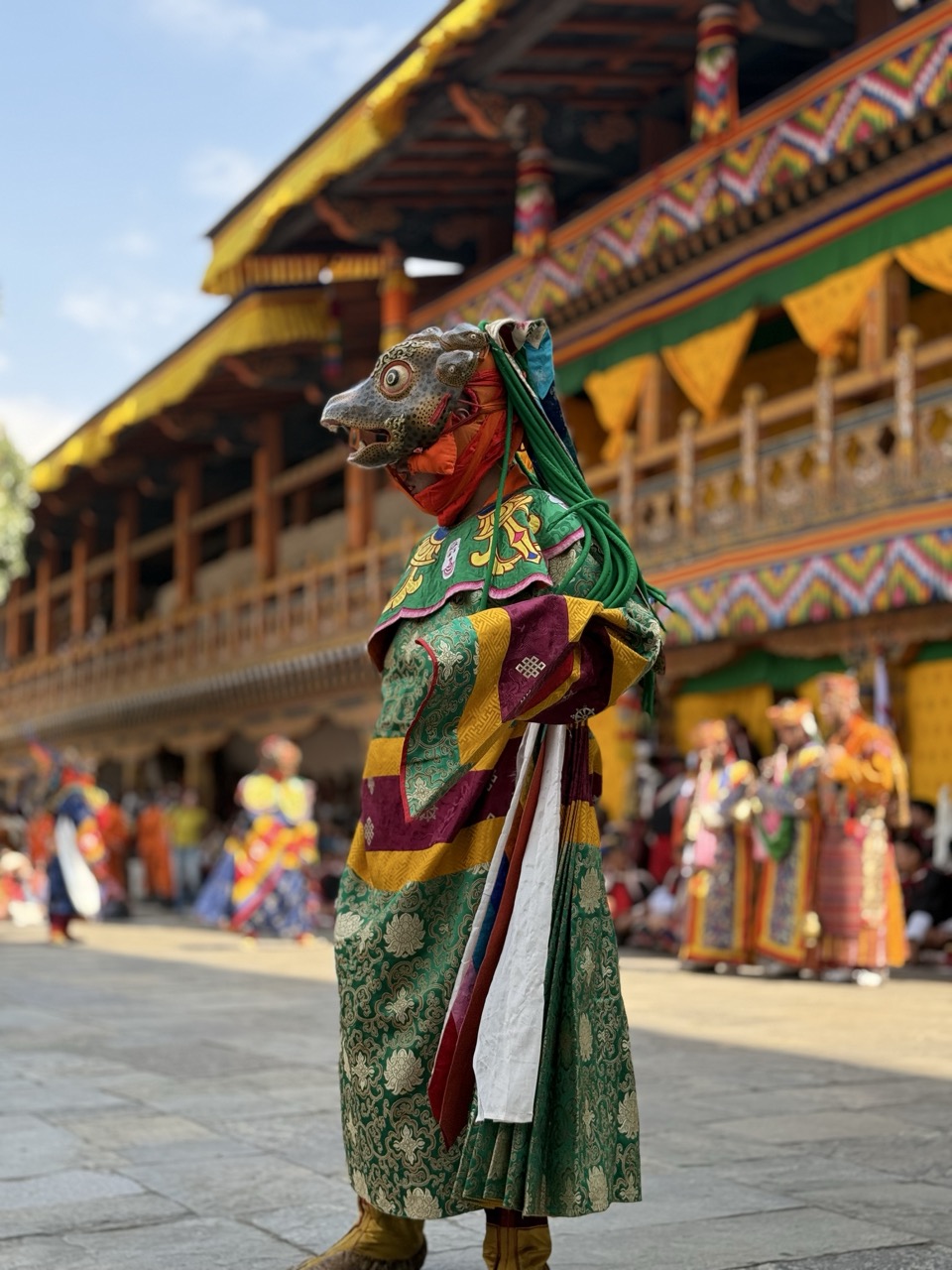
Lastly, it’s not a single individual in a costume, but a big group of them. At some point, I realised that it’s really hard to decide where to look as too many things were happening at the same point in time. We spent about a couple of hours at the festival and headed back to the Paro valley.
Back to Paro
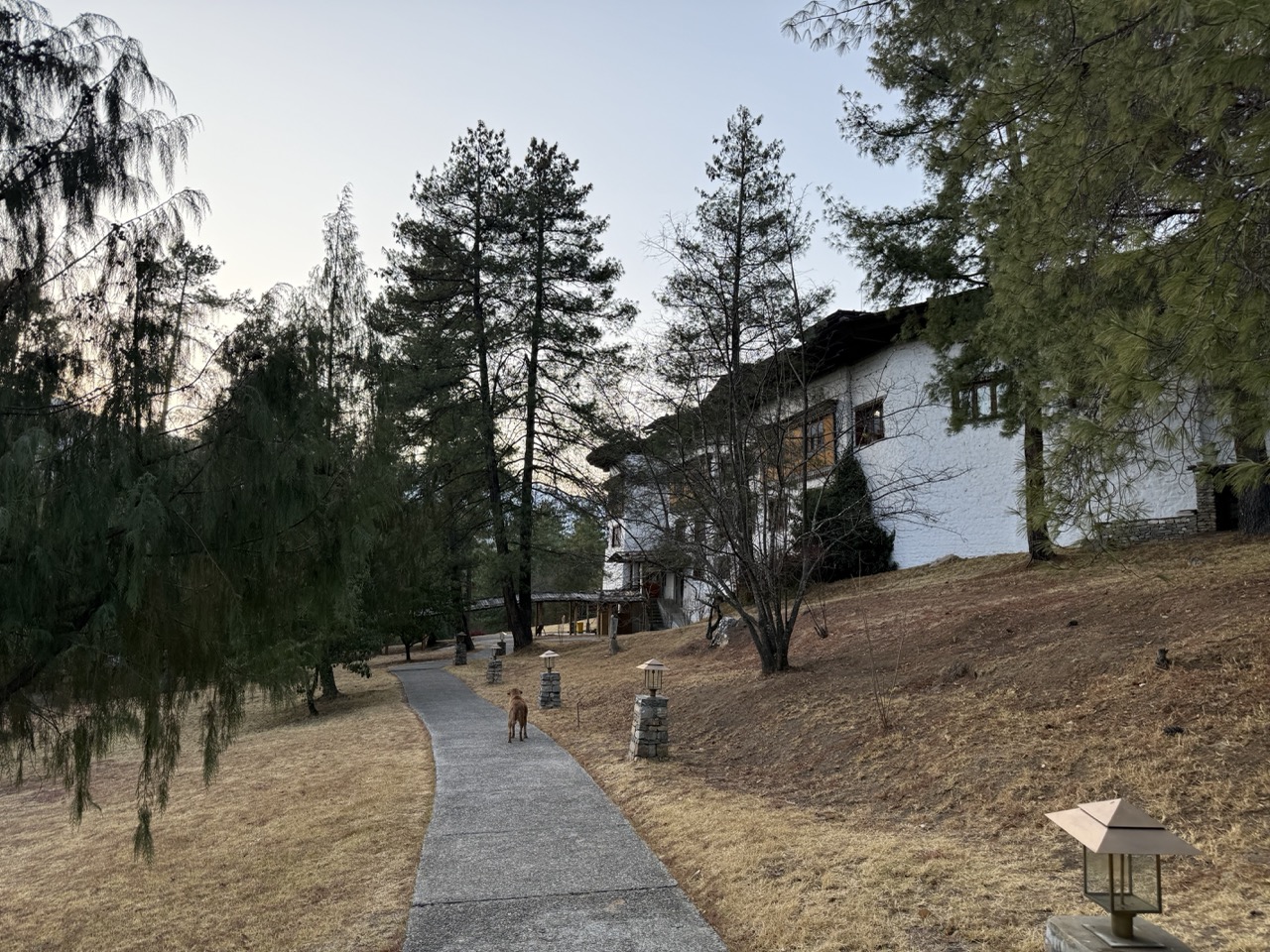
After the festival, we headed back to Paro, a town with an international airport. We used the same road before, so it was a long, 4-hour ride. The most interesting place at the end was our hotel - COMO Uma Paro. This low-rise hotel spreads through a relatively big area, with a main building in the center with only around thirty rooms. The place is tranquil, but the main highlight is dinner.
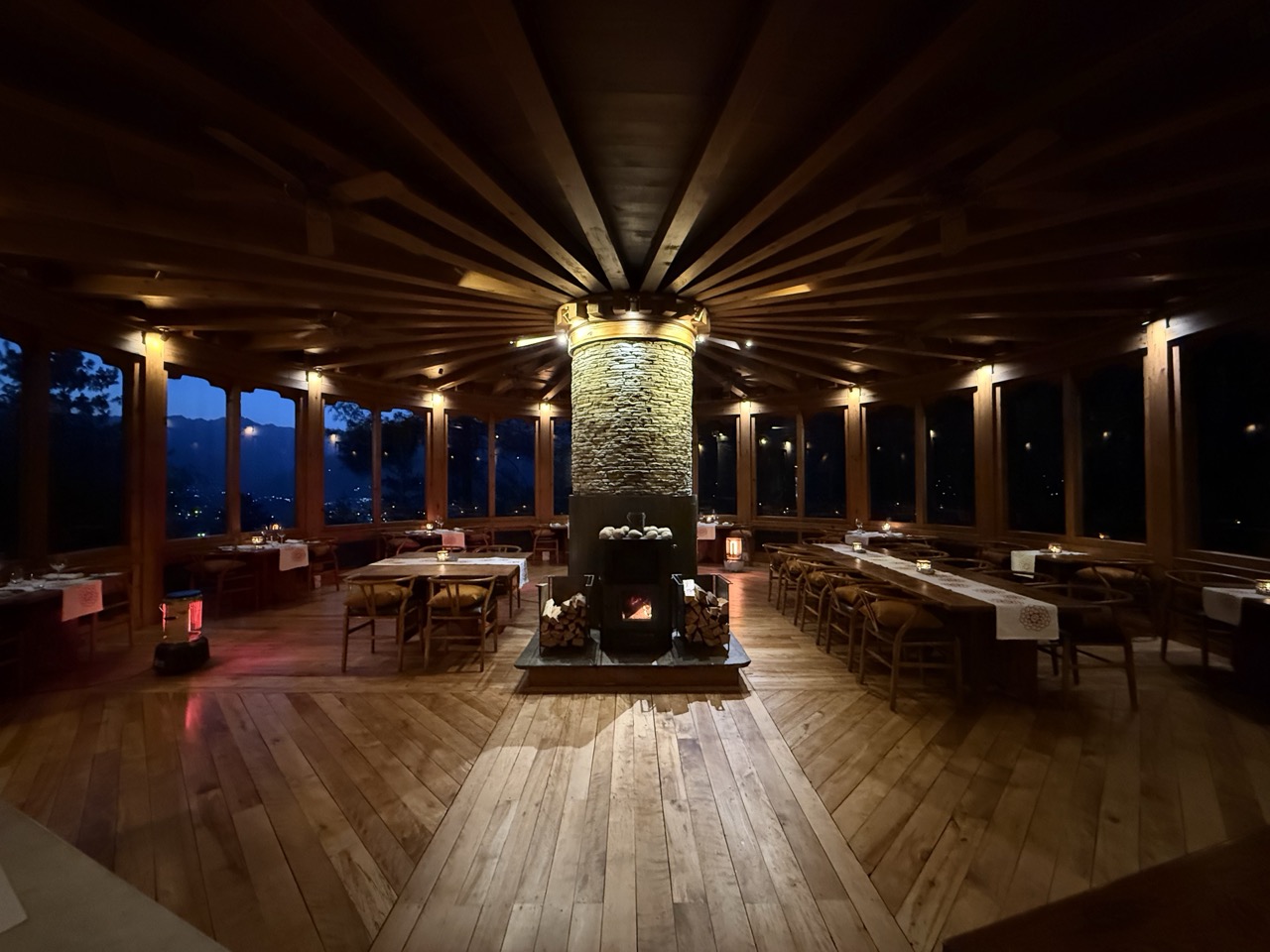
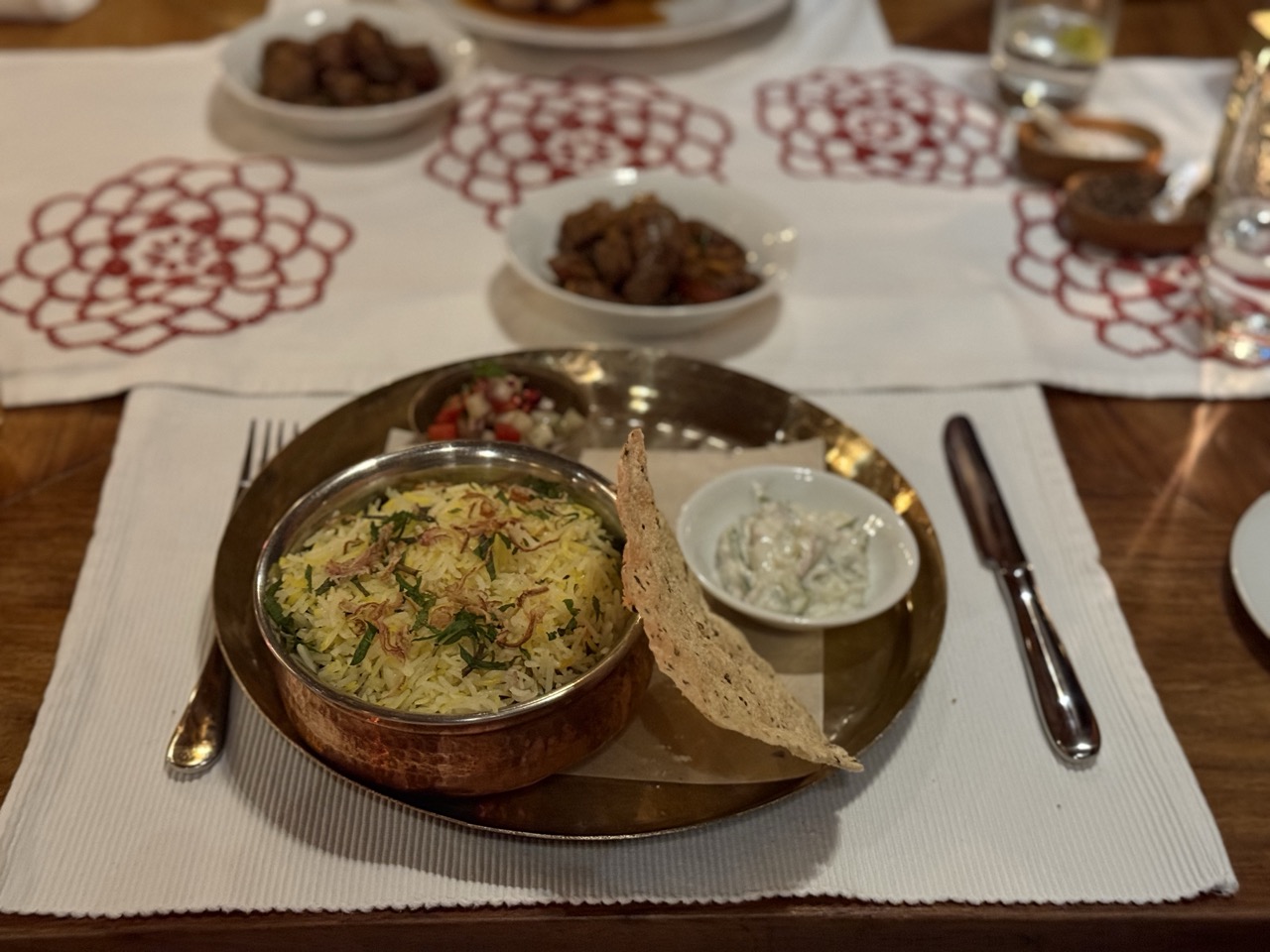
It’s not just your usual hotel dinner (which is, btw, a part of a package), but more like fine dining. You can pick a menu set: either a traditional Bhutanese menu or a Western menu. For each part of dinner, you have an option to choose from. Needless to say, the food is exceptionally good and flavorful.